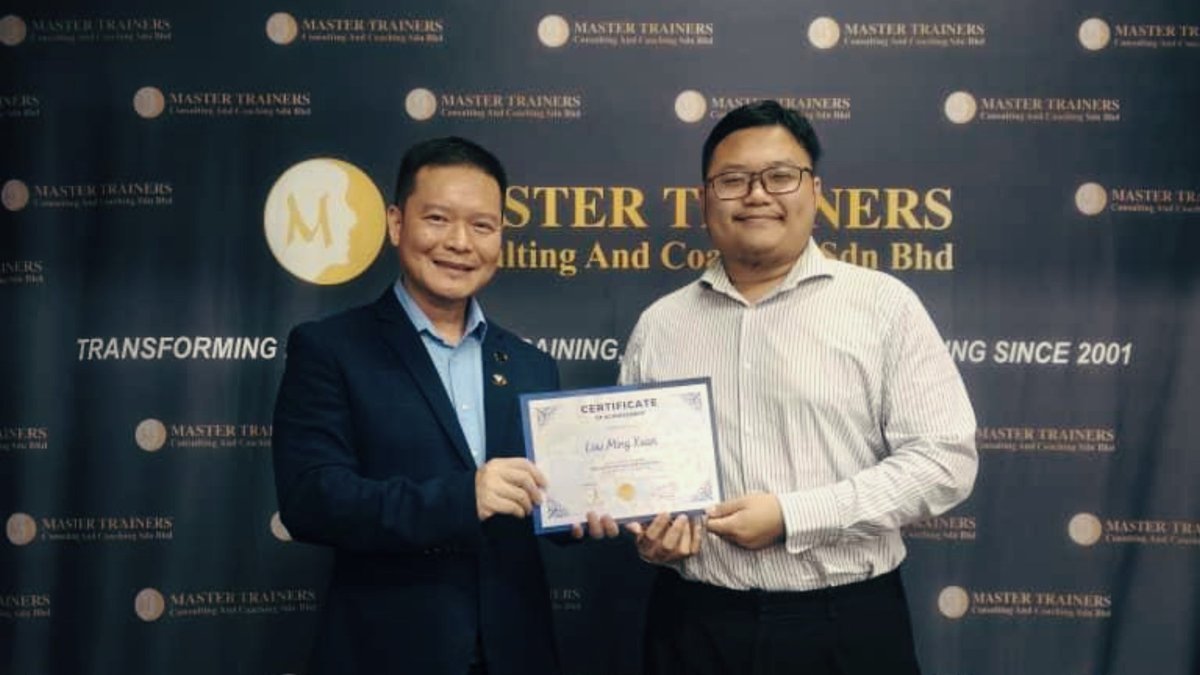
People often ask me why a working photographer-videographer would spend the time and money to get a Train The Trainer (TTT) certification. Doesn’t all that paperwork and certification framework get in the way of actually shooting?
Honestly, I asked myself the same question before I committed. But after going through it, I’d do it again without hesitation. Here’s the full story — why I went for it, what I learned, and what it actually means when you book a workshop with me.
A quick rewind — how I ended up here
I didn’t take the typical creative path. I’m an ACCA graduate. For years, my training was in accounting and finance, not f-stops and frame rates. Photography started as a serious hobby that slowly took over my weekends, then my evenings, then my career.
By the time I officially transitioned to running a production house full-time, I’d already shot hundreds of weddings, corporate events, and brand campaigns. The shooting part came naturally after enough reps. The business side of running LTL Production also felt familiar from my finance background.
But teaching? That was a different beast.
The trigger — students wanted more than just tips
It started with informal mentoring. Younger photographers would WhatsApp me asking how I lit a particular shot, or how I handled a tricky bride who wanted everything perfect. Then designers I worked with started asking if I could teach their team how to shoot their own product photos. Then HR managers from corporate clients asked if I ran formal training programs.
I’d been giving informal advice for years. But there’s a huge gap between “let me show you how I’d shoot this” and running a structured program where 15 people walk in not knowing anything and walk out actually capable of producing work.
What TTT actually is
TTT stands for Train The Trainer — a certification program in Malaysia that teaches you how to design, deliver, and assess training programs at a professional standard. It’s run under the framework that HRDC (Human Resources Development Corporation) uses to certify trainers whose courses qualify for HRDC levy claims.
The program covers things I’d never thought about as a photographer:
- How adults actually learn (it’s not the same as how kids learn)
- How to design a course outline with proper learning outcomes
- How to write session plans with time blocks, methodologies, and assessment criteria
- How to facilitate a room — handling different personalities, energy levels, and learning paces
- How to assess whether your students actually learned what you taught them, not just whether they enjoyed the class
It’s not a content course. They don’t teach you photography. They teach you how to teach — anything.
What surprised me about the program
Three things hit me hard during TTT.
First: I’d been teaching wrong for years.
When someone asked me a photography question before, my instinct was to immediately answer it. Demo it on the spot. Show them what I’d do. That feels generous and helpful. It is, sort of. But it’s also the worst way for them to actually learn.
Real learning happens when the student does the work, struggles a bit, and then gets feedback. My old approach was building dependent students. The TTT approach builds independent ones.
Second: structure isn’t bureaucracy. It’s respect.
I used to think course outlines and session plans were corporate paperwork that got in the way of “real teaching.” After TTT, I see them as the opposite — they’re how you respect your students’ time. Without structure, you wing it. Winging it means some students will miss key concepts because the day didn’t flow right. With structure, every learning outcome is intentional. Every time block is purposeful.
Third: assessment changes everything.
Most photography workshops in Malaysia don’t have real assessment. The student attends, gets a certificate, and walks home. Did they actually learn anything? Nobody really checks. TTT forces you to design assessments — practical exercises, peer feedback rounds, capstone projects — that prove the learning happened. This is uncomfortable for trainers because it puts your work on the line. But it’s also the difference between a workshop and a vacation.
What changed in my workshops after TTT
Before TTT, my workshops were “Terrence shows you cool stuff for a day.” After TTT, they became programs.
Concrete changes:
Course design became deliberate. Every workshop I run now has a written Course Outline with specific learning outcomes. Not “learn photography” — but “by the end of Day 2, you can independently set up and execute a 3-light interior shoot at any location, with technical settings adapted to ambient conditions.” Specific. Measurable. Actionable.
Session plans replaced winging it. I plan every block down to the methodology. Some sections are lectures (necessary for theory). Some are hands-on exercises (where real learning happens). Some are buzz groups where students teach each other (fastest way to consolidate knowledge). It’s not random anymore.
Assessment is built in, not bolted on. Every workshop has practical exercises with feedback rounds. By the end, students aren’t just told “you did great.” They have specific notes on what they did well and what to work on. Some get certificates only after passing the assessment, not just attending.
HRDC-claimable. Because my workshops follow HRDC standards, corporate clients can claim the training fees from their HRDC levy. This unlocks a whole tier of clients — companies who want to upskill their teams but only if it’s claimable. A topic I went deep on in my previous post on HRDC-claimable photography training.
Why this matters if you’re attending one of my workshops
When you book a workshop with me, here’s what’s different from booking with someone who’s only got photography skills:
- You walk in knowing exactly what you’ll be able to do by the end. Not vague promises. Specific outcomes.
- You get real feedback, not just compliments. I’ll tell you what’s working and what isn’t. That’s the only way you actually grow.
- The structure means nothing important gets skipped. Even if you’re slower than the rest of the class on one section, the design ensures you still hit every learning point.
- If your company pays, the cost can be claimed back from HRDC. Real money back, not theoretical savings.
- You leave with a portfolio piece. Most workshops end with a class photo. Mine end with you having produced something you can actually use.
What it doesn’t mean
TTT doesn’t make me a better photographer. My shooting skills come from 10 years of jobs, not 3 days of trainer certification. The certification is purely about the teaching layer.
It also doesn’t mean my workshops are stiff or overly corporate. The framework is invisible to students — what you experience is just a workshop that flows well, has clear structure, and actually delivers what it promised. The TTT side is in the background, making everything work.
Would I recommend TTT to other photographers?
If you’re already running workshops or planning to, yes. Without hesitation.
But understand what you’re signing up for. TTT is intense — it’s typically a 5-day intensive program followed by exams and assessments. You’ll think more about training methodology in those 5 days than you have in your entire shooting career. It will rewire how you think about teaching.
If you only run workshops occasionally as a side income, the formal certification might be overkill. But if you’re serious about teaching as a real part of your business, it’s transformational.
The bigger picture
There’s a saying in trades — “those who can, do; those who can’t, teach.” I think that’s wrong. The best teachers I’ve ever met were people doing the work at a high level AND teaching it well. The two reinforce each other. Teaching forces you to articulate things you do unconsciously. Articulating them makes you better at them. Better at them means better material to teach.
TTT didn’t slow down my shooting career. It accelerated it. Because every workshop I run sends me back into the field thinking more clearly about why I do what I do. That clarity shows up in client work.
It’s the best ROI move I’ve made in years.